Custom Search

Tuesday, February 2, 2010

What's up Doc?

Gardening is one of my favorite hobbies, along with yoga and surfing, all of which are not only good for the body, but more importantly the mind as well.

Today, I decided, was the day to pull some carrots, we will eat them for dinner. I have to admit I have never grown carrots before but these seemed to grow themselves, I am quite pleased with them. I wasn't sure when they would be ready so I have been pulling them periodically. They very rarely make it inside, I usually brush them off and eat them while still in the garden. They are tender and sweet, there is just nothing like food you have grown yourself. I encourage you all to try and grow something today, just ask for any advice or tips and I will do my best to help you out. I am a self proclaimed reformed black thumb, if I can do it anyone can. Enjoy the pictures and we will enjoy the carrots.


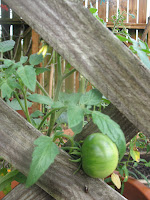
Pillaged carrots........Bibb lettuce..............Mystery plants that sprang up out of my compost

Row of bush beans.........................Cauliflower.....................Mesclun mix


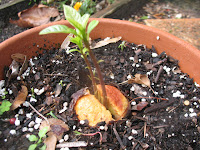
New avocado tree

Friday, January 22, 2010

Spring Cleaning

Yes, I did it. The recent cold snap here in S. Florida forced me indoors and when I took a good look around I realized the dire straits we were in. The house is dirty, again. So yes, I did it, I cleaned, yech. I really dislike cleaning but I have vowed, now, to keep the house from such disarray again. I degreased, decluttered, and, defunked my kitchen this past week. And I would now love to share some wonderfully interesting tips concerning the mysterious power of vinegar.


5 Amazing things Vinegar can accomplish:


  • Vinegar can easily be wiped on almost any surface. No need for ventilation as you use it safely to wipe away mildew.


  • When your coffee begins to taste weak and bitter, it's time to clean your coffeemaker. Pour 2 cups white vinegar and 1 cup water into the water chamber, run through a complete brew cycle with filter in. Change filter and run through with water 2 more times, changing the filter each time. If you need to remove lime and mineral deposits from your tea kettle, place 3 cups full strength white vinegar , boil for a full 5 minutes. Leave vinegar overnight, next morning rinse kettle with cold water.


  • Vinegar cuts grease. Clean grease splatter from stovetop, range hood, and countertop by washing with a sponge and undiluted vinegar. boil 2 cups vinegar in a frying pan for 10 minutes, no food will stick for several months. Keep grease buildup in oven at bay, wipe with rag soaked in full strength vinegar once a week.


  • When you go to wash your produce use 4 tablespoons apple cider vinegar dissolved in 1 gallon cold water, place in spray bottle and spritz produce to clean.


  • Clean your washing machine. When soap scum builds up heavily use hot water and 2 gallons of vinegar, let agitator run 8-10 minutes, turn off washer and allow solution to sit overnight, empty basin in the morning and run through a full cycle to rinse. To prevent heavy buildup run through a full cycle with 2 cups of vinegar once in a while.

*BONUS*


adding 1 cup of vinegar to a load of laundry will:


  • kill off bacteria. all you new parents who use cloth diapers, this will help keep your baby's bottom fresh.


  • clothes will be soft and smell fresh, no fabric softener needed.


  • brighten a small load of whites.


  • keeps clothes lint and static free.


  • if you add to the last rinse, it will set the color in newly dyed fabrics.

Embrace the power (and smell) of vinegar, it has helped to keep our home feeling clean.

Sunday, November 22, 2009

Patience....

Patience is a virtue. I am asking you to please be patient a bit longer. I have a winter break from school coming up, and have vowed to spend some time posting here on this blog of mine.

While you are waiting here is something beautiful to take your mind off of whatever it is that's ailing you.....................

Wednesday, June 24, 2009

Tom Robbins

Tom Robbins is one of my very favorite authors. (thanks big brother) Here is a passage from Wild Ducks Flying Backwards The Short Writings of Tom Robbins:
***
Rivers are the true highways of life. They transport the ancient tears of disappeared races, they propel the foams that will impregnate the millenium. In flood or in sullen repose, the river's power cannot be overestimated, and only men modernized to the point of moronity will be surprised when rivers eventually take their revenge on those who dam and defile them. River gods, some muddy, others transparent, ride those highways, singing the world's inexhaustible song.

Wednesday, June 17, 2009

Holy Plastic!

Who says kids these days aren't smart and motivated.
Check out this article I stumbled upon.
(at least in my eyes)
It seems like such an easy concept
now that someone else has thought it up.
Hopefully this kid continues with such great work.
We are in desperate times, and in need of more innovative young thinkers like him.
Congratulations!

Sunday, June 14, 2009

Two birds with one stone

The following is my final writing assignment, besides my final exam, for my current English class. As I was writing it I chuckled to myself as it pertains to the video : The Story of Stuff by Annie Leonard that I had been thinking on earlier in the week. I am not sure if I have already endorsed this video in this blog, but even if I did it's worth a second mention. Enjoy the video, criticize the writing, and have a great week.

(sorry about the crazy alignment, I hope it's readable, I copied it from my Word program)

War Zone

We are in a war, and most of us are blissfully unaware of it. Every day we are

bombarded by images, slogans, and propaganda convincing us that we are in a great and

dire need for some product. We are constantly barraged by marketing techniques, so

much so, that we do not even notice it anymore.

My first experience with this battle came when I was eleven years old. My mother

and I went shopping for new bathing suits. I found a bright red one piece with the cursive

curly script of Coca-Cola running all through it. I loved it; it appealed to all of my

senses. My mother, thinking nothing of it, bought it for me. I wore that bathing suit

proudly for about three weeks. Then, one summer day, we were going swimming. We

had to make a stop at my grandparent’s house first. I proudly flounced in, in my red

Coca-Cola bathing suit covered only by a pair of cut-off jean shorts. My grandfather

took one look at me, and then promptly chastised my mother for allowing me to be a free

walking billboard. I barely understood what he was talking about, but I clearly remember

not liking my bathing suit after that.

That scene from my childhood has stuck with me. Every time I make a clothing

purchase, I am extremely conscientious of where and how the logo appears. It seems that

these days you can not get away from this branding of advertisers. They “stamp” us with


their logos, and then we in turn judge, label, and congregate with people according to

these labels. We have yet to realize that the values we share with someone should matter,

not the brands we choose to buy.

Marketers have a moral obligation to stray away from propaganda techniques.

Ann McClintock states in an essay she wrote, that, “Propaganda is not necessarily

concerned with what is true or false, good or bad. Propagandists simply want people to

believe the messages being sent” (270). McClintock goes on to share a study which

found that five hundred advertising claims barrage each of us during an average

day(271). If we have five hundred messages battling our senses everyday there should be

truth in them. Advertisers are subtly lying to us, manipulating our senses for their own

greed; the sad part is we are letting them. In the first paragraph of McClintock’s essay

she speaks of the brainwashing that marketers use to bomb us with images. She also

states that even those of us that know better, that know what is going on, allow these

messages to permeate our subconscious (270). Why would we do this? “They work

because they appeal to our emotions, not to our minds” (275), McClintock explains.

We, adults, should know better. We are educated, informed, and can rationally

make, or not make, our own decisions. However, children do not have all the tools yet to

make their own prudent decisions. Marketers have latched on to a new target group, even

coming up with their own name for these individuals, tweens (Hymowitz 203). Kay

Hymowitz asserts that, these are children between the ages of eight to twelve who are

“leaning more and more toward teen styles, teen attitudes, and, sadly, teen behavior at its


most troubling” (203). Instead of projecting clean, innocent fun at these children,

advertisers are capitalizing on their desire to look and act older. Hymowitz declares,

marketers have found in their research, “that by the time they are twelve, children

describe themselves as flirtatious, sexy, trendy, athletic, and cool. . . scorning any

symbols of their immaturity” (203).

These advertisers have a choice. They can target their ads to these children, and

teach them morals and values accepted by society. Or, they can continue to exploit these

tweens’ confusion of themselves, and drive them to want more of the advertiser’s

products in order to achieve the “cooldom” that the tweens are longing for.

Unfortunately, the marketer’s decision for exploitation harms these children more

than they understand. Hymowitz goes on to explain that younger children are having

more adult problems; one of these is eating disorders. She determined that this stems

from a “pre-mature fashion-consciousness” (205). Their young, confused minds, in order

to fit in and be cool, are harming their bodies to meet the standard for normal the media

and marketers portray. Hymowitz contends that due to parents not being around as much,

and a “sexualized and media-driven marketplace,” parental influence is lessening. This

makes these tweens susceptible and defenseless to peer pressure in order to conform

(206).

Marketers and advertisers could alleviate these problems with clear cut guidelines

towards advertising to children. The problem with this is there are no clear cut child and

adult worlds anymore. Our children are exposed to everything. I challenge you to watch a


recent, media-hyped, blockbuster movie meant as family entertainment, and not find very

adult hidden references hidden throughout it. Marketers place these barbs in family

movies so parents will want to take their children; so everyone will have a good time.

The problem is the more intuitive children pick up on them. These children, striving to be

more adult-like, then carry these ideas to school and inflict them upon other children.

Now these children who are inflicted upon feel the pressure to grow up and fit in,

completing a very vicious circle.

The real solution to these issues would simply be the truth. If companies would

spend their money on creating a better product they would not need to invest billions of

dollars in the corrupt advertising sect; their product would speak for itself. Instead of

trying to manipulate the general public with their invasive tactics and evasive maneuvers,

try to bombard us with something worth buying. Unfortunately, too many companies feel

that if they create a superior product they would lose money. In fact, what these

companies fail to realize is, in creating something of worth, they would garner a loyal fan

base.

We, adults also, need to create our own solutions. We need to stop allowing

propagandists from taking advantage of our lazy selves. We have to research the claims

brought on by advertisers, and not allow them to make our decisions. “Otherwise, we

have consented to handing over to others our independence of thought and action” (275),

as McClintock so aptly put it. That will be construed as a victory for the other side.


Works Cited

Hymowitz, Kay S. “Tweens: Ten Going on Sixteen.” The Longman Reader 8th ed. Eds.
Judith Nadell, John Langan, and Eliza A. Comodromos. New York: Pearson/Longman, 2007: 202-206

McClintock, Ann. “Propaganda Techniques in Today’s Advertising.” The Longman
Reader 8th ed. Eds. Judith Nadell, John Langan, and Eliza A. Comodromos. New York: Pearson/Longman, 2007: 270-275

Saturday, May 30, 2009

A rant in A minor


"Being green" is more than a fad, more than a philosophy, and more than a way of life. It should be, just the way we are. We as a society have come so far from our origins, we don't even recognize them anymore.

I have to admit up front, I don't know much about Indian tribes, but I find myself, more and more, wanting to know. From what I understand they lived and breathed green. Most tribes waged no wars, unless for defense. They worshipped Mother Nature; they took no more then they needed, and they used every bit of what they took. They gave back to the Earth what they recieved from it, and in this way sustained themselves.

My husband and I were having a chat this morning about our new generation. Our kids believe that money is never scarce, when something breaks you buy a new one, and there is no need to take care of anything, because there is always something newer and shinier around the corner. It's ridiculous. Why are we, as parents, not teaching them to value things. Some of us do, but not nearly enough of us. In this day and age, and what we know about the environment we are destroying, it would seem to reason that we parents would pick up the slack. We would be adamant about setting good examples for our kids. If we teach them to sustain their world, then they won't have to teach their children to sustain it. It will become ingrained, a way of life.

Come on parents, rally together! Teach your kids the value of a dollar, teach them newer is not always better. Show them how to make use of things they would otherwise throw out. RECYCLE! COMPOST! It's not that hard. Use every bit of everything you buy, think about the things you NEED to have. What examples are we setting for our kids? From what I've seen of the majority, not good ones. Prove me wrong.

Friday, May 22, 2009

The sky could be green!

credit: National Geographic

When I think of rooftop gardening I envision an array of colorful containers brimming with plant life, a skyscraper view, and a beautiful sunset. What can I say I'm a sucker for a sunset. The recent May issue of National Geographic changed my vision. There is an interesting article in it that talks about a new way to build. Instead of building these boring structures with flat black top roofs, why not take that space and create an entire environment. They are called living roofs. In Germany, Switzerland, and Austria they have become law on roofs of sustainable pitch. Did you know Chicago's city hall has one, and is currently North America's leading green roof city? They are also developing living walls, what a neat concept. This is revolutional. We can change the way we think and perceive things, it just takes a little imagination. I do believe there is a need for all of these buildings, because of technology, our population is expanding at a rapid pace. BUT, we don't have to live in these concrete jungles anymore. We can take them back and create a little bit of Earth. Why haven't we done this before, and why is this not mandatory here? Here is the start of the article, I urge you to check it out before they move on to other things. It was interesting, and at the very least the photographs were beautiful. Up On The Roof.
I am sold. How about you?

Monday, May 11, 2009

We now interrupt our regularly scheduled programming....


Sorry to anyone who may or may not follow this blog on a regular basis, I have recently started school again. With that said I have been overwhelmed as of late and have not been able to update here properly. I assure you I have some good posts in mind, at least they're good in my mind :) and will try to have something new up this week. Until then enjoy the pictures.

Wednesday, April 29, 2009

Give mom... clean air?

Mother's Day is quickly approaching, it's May 10th. You could do the traditional and send Mom roses or daisies, but how about something a little more eco-friendly?

The peace lily, or Spathiphyllum, cleans your air, they remove 'environmental contaminants, including benzene, formaldehyde, and other pollutants', says Wikipedia. They are considered useful in combatting indoor air pollution. NASA did a 2 year study and created a list of the top ten plants to acquire.

This beautiful flowering bulb, is an elegant plant to give your mom on any day. They are easy to care for, need water only 1 - 1 1/2 weeks or when the soil becomes dry. They like the shade and make excellent indoor plants. Mine have recently started blooming, so every year your mom can be reminded of how much you love her.

Tell your mom you're thinking about her this Mother's Day in a unique way that will last throughout the year. Not only will you make your mom smile when she sees this gorgeous plant gracing her home, but you will know that you are contributing to a better, healthier lifestyle for her.

Sunday, April 26, 2009

Yum.

Just a quick recipe I tried the other day for all of you that I convinced to eat a little less meat. I found it in Ladies Home Journal under their piece The Healthy Cook.

  • 6 oz. dried farfalle pasta (or whatever you fancy)

  • 1 tbsp. olive oil

  • 1 medium onion, chopped

  • 1 cup sliced portabella or other fresh mushrooms

  • 2 cloves of garlic, minced

  • 4 cups of spinach, thinly sliced

  • 1 tsp. fresh thyme leaves, chopped

  • 1/8 tsp. ground black pepper

  • 2 tbsp. shredded parmesean

Cook pasta according to directions, drain. In a large skillet heat oil over medium heat. Add onion, mushrooms, and garlic. Cook, stirring occasionally, until tender, 2-3 minutes. Stir in spinach, thyme, and pepper. Cook until spinach is slightly wilted, about 1 min. Toss mushroom and spinach mixture with pasta and sprinkle with cheese.


makes 4 servings. 225 calories per serving,5.5 g total fat, 1 g sat fat, 66 mg sodium, 37 g carbs, 2 mg chol, 9 g protein, 3 g fiber.


This dish was so delicous even my pickiest kid (you haven't met picky until you've met this one:) raved about it.


Hope everyone enjoys, and if you like we can share recipes from time to time.

Thursday, April 23, 2009

Happy Earth Day- one day after....

but really isn't Earth Day everyday? :)


I spent the day pruning my mulberry tree, isn't the song all around the mulberry bush? I was lucky enough to have this tree planted by the previous owners of my house. I didn't really know what it was until 2 years ago, and we just started eating them last year. This was my very first harvest and I didn't even get all of them, we pretty much just took the ones off the branches that were pruned. I have a ton, so if anyone has some good recipes they want to share let me know. I will be trying them out in my smoothie mix later when the kids get home from school.


Hope everyone had gorgeous weather like we did, and did something fun.

Thursday, April 16, 2009

Celebrate!

No matter what the occasion, use one or all of these ideas to make your next function eco-friendly.


  • Host the party at your local park, beach, or own backyard. When all your guests arrive have a scavenger hunt, scavenge for trash and recyclables. Hand out prizes for most trash collected and most recyclables collected. You can even hide a few prizes in the area to make it interesting.

  • Serve all your goodies with recycling in mind. Compostable plates and cups, bottles and cans, bins labeled and available.

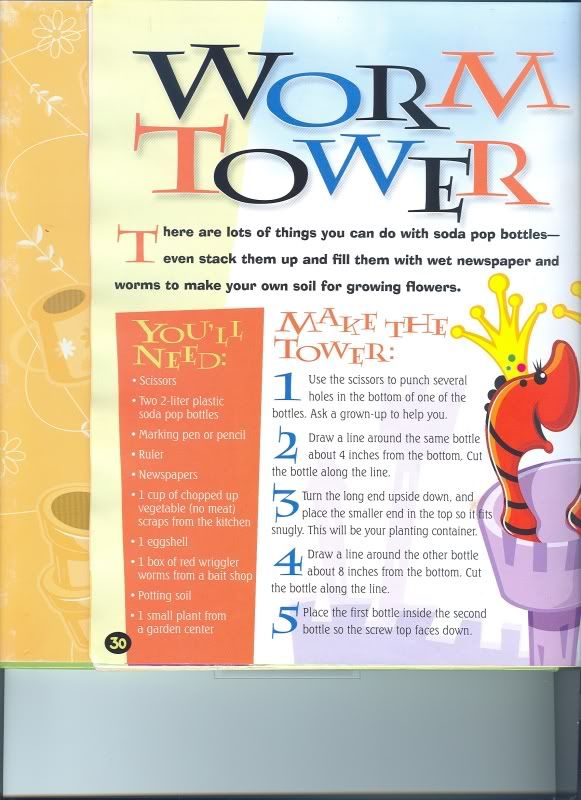
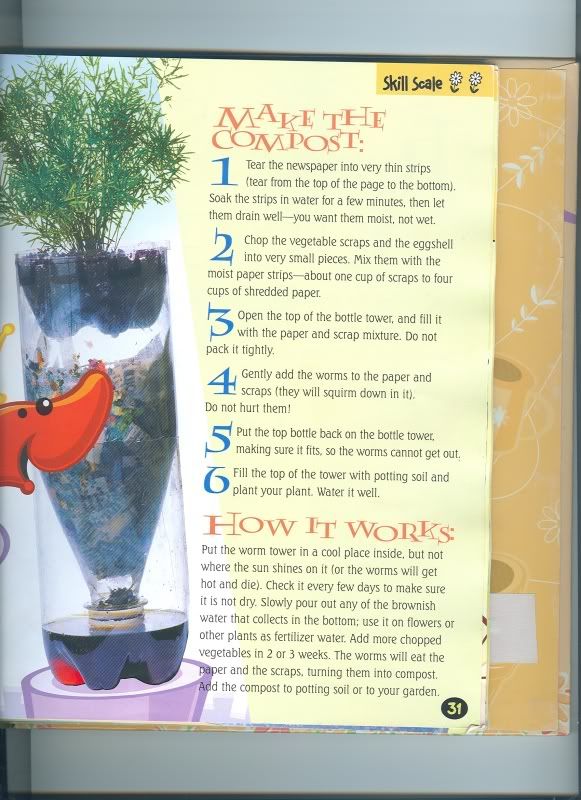
  • Like to make party favors? Try a worm composting tower. It was fun to make, and the petunias we planted with ours are vivacious and thriving.

  • Cut down on the electricity. Bring along some acoustic guitars, bongos, tambourines, harmonicas, whatever you can scrounge up. Got nerves of steel? Let the kids release their inner rock stars on real instruments.

  • While on that scavenger hunt pick some flowers, pretty branches, and leaves. Create one of a kind cards to use later.

  • Spread the love. Hand out small packets of sunflower or tomato seeds as party paraphernalia.

Have a great time celebrating life. Creating eco-friendly lifestyle changes help to keep the world healthier and in turn us all healthier, which means more celebrating to come.

Tuesday, April 14, 2009

Books-check 'em out.


I am a reader by nature. I always have something on hand-- fiction, nonfiction, newspapers, magazines, you name it, I''ll read it.

I started thinking about all the reading I am doing and how it affects the environment. Most of my magazines come from my sister, then promptly get dropped off at one or two of my kids' activities. My books I borrow from the library, and if I buy a book or two, it is almost always used. Yes, I buy the Sunday newspaper, but I love to cut the coupons, do the crosswords, and then we recycle the paper, either in my compost or to wash the windows at the house. So not too much paper 'wasted', but I thought there is always another way.

This leads us to the Kindle- an awesome idea. You can now use this unique little device to access and read all kinds of things, not just books, but newspapers, and even blogs. They have a new version out, the Kindle 2, it is the width of a pencil, has wireless access to download your books, it can read the items to you, comes with a built in dictionary, and has adjustable text sizes. The thing is totally awesome---looking, because to tell you the truth I don't know if I will ever get one. It's not the pricey tag, but the fact that I kind of like the way an old book smells, the way you have to adjust yourself at night when reading a giant book, and quite honestly when I am on the computer too long I get headaches. Is this item for me? I don't know yet, but I definetely haven't written it off.


My friends and I routinely share books between each other, we get to help out the environment, dish about the characters we love, and introduce one another to new genres, some we never would have considered without the recommendation. I like to think of this as my own little private book swapping club. Then I found out they have official book swapping clubs, come on check 'em out.

Paperback Swap, Book Mooch , and Swap Tree are all free to join. The idea works like this, you list books lying around your house that you don't want anymore. When someone requests your book, you ship it to them at your own expense and then you earn a credit. Each credit you earn you may then use to request a book from another member who ships it to you at their expense. Swap tree also lets you swap DVD's, CD's, and video games. Pretty cool.

Whatever you decide, read! It's one of those dying traditions, with television and the internet constantly berating us with noise. Sometimes it's nice to unplug all the electronics, sit outside or light some candles, grab a book or a Kindle, and read a great story. It fosters imagination in us and inspires.

Sunday, April 12, 2009

Plant Trees Everybody!


National Arbor Day will soon be here, April 24th. Visit arborday.org to see how you might celebrate, what types of trees to plant, and how to care for them once you do. Arbor Day was established by J. Sterling Morton, National Arbor Day was established on the last Friday of April, in observance of his birthday, although some states observe Arbor Day seperately, to coincide with the best time of year for planting.


Planting trees is an especially important habit, soil erosion is one of the things damaging our lands and contributing to environmental problems. When soil erodes, the top layer of the soil is destroyed, either by washing away entirely or through tillage. The top layer of soil is termed "the cream of the soil" which carries the best nutrients. When the soil is tilled for farming it thins down the nutrients of this top layer, resulting in an impoverished soil and crops. Always rotate your crops to keep the soil from becoming exhausted of its nutrients. Also when the soil is washed away by water it carries with it agricultural pollutants, creates "sedimentation in watercourses and dams, disruption of the ecosystems of lakes, and contamination of drinking water." Trees and plant life naturally keep soil from eroding, the soil stays entangled in the roots.

So this Arbor Day gather your friends, family, and neighbors and host a small party of your own. Plant trees in your backyard, teach the kids about the important role nature plays in our lives, and have fun doing it. Encourage your community leaders to strive for the prestigous award the Arbor Day foundation gives, Tree City USA . Not only can you enjoy a healthier life because of trees and plants, but it become a more beautiful one too.

The beautiful crepe myrtle trees I received the first year I became a member of the Arbor Day Foundation. Yes, by becoming a member they reward you with 10 free trees, or you can choose to donate the trees to a National Forest in need. It's a win-win situation, sign up now.

Monday, April 6, 2009

A day late and a dollar short...

Yesterday I was supposed to write my update on bad habits, but as always with me, I procrastinated. Which leads me to... bad habits, I am a procrastinator. I have company coming to visit this week, which means I have a lot of stuff to do. So what did I do all of last week? Nothing. Yesterday, I worked outside in my yard all day, today and tomorrow I will frantically be cleaning my house. Which is why I am a day late, leading me back to ... bad habits.
I am a bad 'greenie', I forgot all about Earth Hour last weekend. It was 9:36 pm my time when I realized that we had missed it. As I looked around the house at all the lights that were on and t.v.'s blaring video games at me, I realized it doesn't take everyone turning everything off all at once, to make a difference. It takes everyone thinking twice about their impact everyday, that makes a difference. So, I made up for it, on Sunday I used as little energy as possible all day. My bad habit change for the environment was incidentally, unplugging my appliances, ironic for forgetting Earth Hour, I know. I have accomplished this task, mostly, I just need to buy a few power strips. My new bad habit change is to stop wasting paper towels, and I am well on my way. How has everyone else been doing? Anyone tackle something that they've been vowing to change? I'd love to hear about it. Don't stop though, with one bad habit down, try to erase another one. Just 21 days to stop a bad habit. Although, I am a glass half full kind of gal, so let's look on the bright side, 21 days to start a good habit. What can we accomplish in the next 21 days? Maybe I'll work on my procrastinating, or maybe I'll try that one some other time.

Tuesday, March 24, 2009

Naturally Fun!


Woo Hoo! Spring has arrived in my little neck of the woods and all I want to do is be outside. I thought I would share some fun things to do with the little ones, while enjoying the beautiful weather.


Now I really like the NWF (National Wildlife Federation), they have a great website. They will certify your yard as a wildlife habitat with a few simple steps. If you don't want to get official, there are a lot of small things you can do to brighten up your favorite little person's day.

  • Spread some bird seed around. Can you figure out each birds' unique tune?
  • Stack twigs, leaves, and branches into a small pile and see who comes to visit.
  • I have found that when I water my plants with the sprinkler, the dragonflies and birds flock to it.
  • Grab a magnifying glass, how many insects can you find in a small patch of grass?
  • Take a walk. Is there a nature preserve near you? How many animals can you find? Just taking a walk around my neighborhood, we can see rabbits, snakes, hawks, and even an alligator or two if I go down by the canal.
  • Now I know that this isn't exactly a 'green' post, but I truly feel that we need to get our kids interested in environmental issues. One of the ways to do this is to foster a love of the outdoors. Most kids like animals naturally, so when you help them to see them in their native habitats then they will strive hard to keep them there in the future.


Another thing we enjoy is camping, my daughter absolutely loves it, she has her own tent. Many weekend nights you can see the tent up in my backyard as she lays under the stars with our cat and a good book.


If you don't have a backyard, or it's still freezing in your neck of the woods then make your own camping spot. Throw a sheet up in the living room and place blankets, books, kids, and pets in a pile. (hint: if you use a small fan under the sheet, it will keep your tent nicely erected.)


Take them with you to the store and let them pick out seeds and plants to create their own gardening bed. They will love to watch the plants grow under their loving care. If you help them to plant a vegetable garden, you may be surprised at what types of veggies they may consume in the future.

my nephew Jack, being curious.


Kids are naturally curious, let's get them curious about our environment and we will create little foot soldiers on our quest to tread a little lighter.

Friday, March 20, 2009

Plastics!


There are many arguments out there about why plastic is bad. While researching I came across some propaganda from the plastics company stating that if you considered the life of plastic it was actually a more environmentally responsible product. As if.

What I really found in my research was that plastic IS bad for you, imagine that. The best plastic is no plastic, but then we come back to the argument of convenience vs. green. How many of us can really avoid plastics all together? It seems nearly impossible, everything has plastic in it, on it, around it....


Chemicals used to formulate plastic migrate. Migration, when used in regards to plastics, is the movement of free toxins from plastics into the substance they contain. Let's say you make a healthy organic salad and place it in a plastic container, now all the free toxins are corrupting your no-longer organic veggies. The plastic industry, as well as the government agencies that supposedly regulate it, say that the amount of toxins released from the plastic chemicals is such a small dose that they are safe. The problem with this, is that the size of the dose is irrelevant because some of them are more toxic in smaller doses. At what age and stage of life you are in when exposed is also important, pre-pubescent children, embryos, ovums, and sperm are all affected at low doses. They cause endocrine disruptors. Then you take into account synergy. Synergy
occurs between the chemicals and now you have a volatile, toxic super chemical whose effects are rarely monitored.
What to do, what to do? We just figure out what chemicals are in which plastic, and how they interact with each other, and avoid the bad ones, easy. Wrong. The chemicals in each plastic are considered trademarks of the companies that produce them, therefore do not have to be divulged.

So like I said, all plastic is bad.


If you choose to use plastic and most of us will have to, try to avoid #3. That's the one they call, PVC or polyvinyl chloride. It's like the king of the bad plastics, also try to avoid #'s 6 and 7. The 'safer' option, at least for foods are #'s 1,2,4, and 5. The truly safe option is to only use glass containers. And remember no matter how many dirty dishes you have piled in the sink, make one more. NEVER heat up your food in a plastic container, always grab a plate to reheat.

***For more information check out these sites***

Slideshow of plastics and their numbers, for a visual realization of what plastic is where.

This brochure describes in detail information on all the numbers.

Then check out this no-plastic fanatic, for some great ideas on how to get plastic out of your life.

I have to say after exploring information for this post, I have found myself checking all plastics, and even trying to avoid them in favor of glass and metals. Let me know how you got rid of plastic in your life, I'd love to utilize the tips.

Sunday, March 15, 2009

Bad Habits


Doors signify a change, new beginnings.

I'm not exactly Miss Green Queen, and I don't mean to come off like I am. I understand I can be a bit preachy, but really I'm just preaching to myself. Reminding myself to tread a little lighter, and change some old habits. We all have our bad habits, my number one is procrastination. I also bite my nails, never eat breakfast, and don't brush my teeth enough. All of these habits are easily changed, yet I continue on. I have heard that it takes 21 days to break a habit, 3 weeks.
I also have bad 'green' habits. I use paper towels often, I never unplug my appliances, I haven't switched every light bulb to a CFL. Same thing, they're easily changed. It got me thinking, what bad habit was I going to change this first 3 weeks? What can I do differently? I could choose to sit here, lament and make excuses, or I could stop talking/writing and do something.
Let's check back in 3 weeks, tell me, what did you change?

Tuesday, March 10, 2009

Being Veg in a Non-Veg House

It has been said one of the most effective ways to fight global warming is to go vegetarian.* Here are some quick facts* on animal agriculture:
  • Eating 1 lb. of meat emits the same amount of greenhouse gases as driving an SUV 40 miles.

  • If every American skipped 1 meal with chicken and had a vegetarian substitute instead it would equal carbon dioxide savings the same as taking more than a half million cars off the road.

  • An area the size of 7 football fields is destroyed in the rainforest every minute to make room for grazing cattle, but each vegetarian saves 1 acre of trees a year

  • It takes 5,000 gallons of water and 16 lbs. of grain to produce 1 lb. of meat. Farmed fish are fed 5 lbs. of wild-caught fish to produce 1lb. of meat for us to consume. You would save more water not eating meat than you would by not showering for an entire year.

  • 20% of the world's population could be fed with the grain and soybeans used to feed the United States cattle alone.

  • Of all the raw materials and fossil fuels currently used in the U.S. more than 1/3 goes to raising animals for food.

In 2006 the United Nations put out a report titled Livestock's Long Shadow, informing of the environmental consequences of eating meat. They stated that the meat industry produces almost 40% more greenhouse gases than all SUV's, cars, trucks, planes, and ships combined. Animal agriculture is the leading source of methane and nitrous emissions, while also contributing to land degredation, climate change, air and water pollution, water shortage, and loss of biodiversity.*

You might think that being a vegetarian in a carnivorous household might be hard, actually it just took a few minor adjustments. We've always cooked a traditional dinner, you know-- meat, starch, vegetable. I just had to make sure I had an extra something for my protein-- beans, avocado, or you could try a meat substitute, there are a ton of varieties out there. We made roast chicken, garlic rice, black beans and asparagus for dinner the other night, I had everything but the chicken.
We also had a yummy make-your-own-salad bar. Whatever your tastes are I'm sure you could pledge to be veg at least one day a week. Here at my house we are going to strive for one completely meat free meal (at least) a week. It's good for your health and the environment, why not give it a shot?

all * info comes through peta.org and GoVeg.com